Platform Buildout

Build a production-ready
Databricks Lakehouse

We design and implement Databricks Lakehouses - infrastructure, pipelines, CI/CD, and governance - on Azure and AWS. Every engagement ends with a production-ready platform and a team that can operate, extend, and troubleshoot it independently.
WE'VE SEEN THIS BEFORE.

Getting started on Databricks is easy.
Getting it right is harder.
The platform is chosen. The business case is approved. But standing up Databricks in line with best practices takes experience that most internal teams don't have yet.
Any of these sound familiar?
The First-Time Build Problem
"We've got Databricks set up. We don't have a reference architecture for how to use it properly."
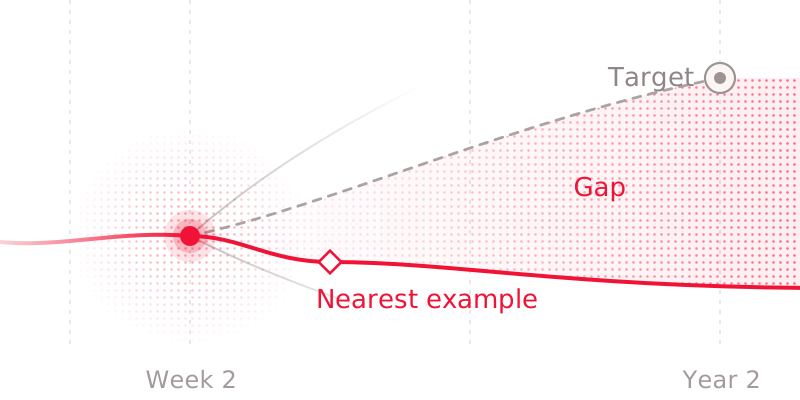
Without a proven implementation pattern, teams build toward the nearest working example rather than a production-grade target. The decisions made in the first two weeks define the platform for the next two years.
The Dependency Trap
"The consultants built something impressive. Now only they know how it works."
A platform that only one team understands is a liability, not an asset. If the internal team can't operate, debug, and extend the platform after delivery, the engagement created a maintenance dependency rather than solving one.
The Piecemeal Problem
"We have pipelines. We have a workspace. We don't have a platform."
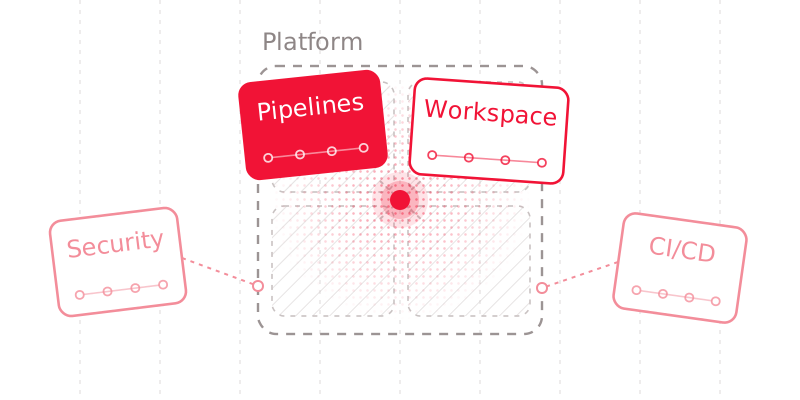
Each component works on its own, but nothing ties them together. Without an overall architecture to build towards, every new pipeline follows its own pattern, adding to the technical debt instead of the platform.
The Approach

Architecture first. Production standards throughout. Your team runs it when we leave.

Every platform engagement starts with the target architecture, not with code. We design the cloud infrastructure, data flows, governance model, security, and CI/CD before implementation begins. Then we build against that architecture, with every component held to production standards. Knowledge transfer happens throughout, and the handover includes the runbooks and documentation your team needs to run the platform on their own.

01

Design before implementation.

Cloud infrastructure, data flows, Unity Catalog structure, governance model, security, and CI/CD are all defined, reviewed, and signed off before the build starts. Implementation follows the plan, not the other way around.

02

Production standards from the first commit.

Every pipeline, Terraform module, and deployment script is built to that standard. Development, staging, and production environments are separated from the start, so there's no "productionisation" phase waiting at the end.

03

Your team owns it after we leave.

Handover is a structured phase, not an afterthought. It includes runbooks, architecture documentation, and CI/CD playbooks, building on the knowledge transfer that happens throughout the engagement. When we're done, your team can operate, extend, and troubleshoot the platform on their own, and will already have deployed a change through the CI/CD pipeline independently.
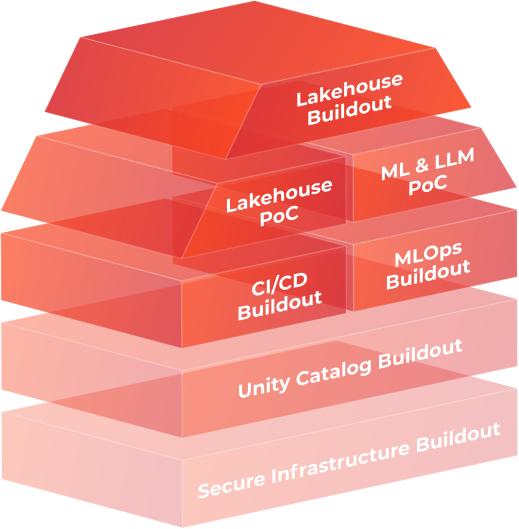
Platform Buildout Packages

Four packages.
Every stage of the platform journey.

Start with a PoC to validate the platform on your data, then build the full Lakehouse once the decision is made. If you only need CI/CD or secure cloud infrastructure, both are available as standalone packages. All packages follow the same engineering standards and delivery methodology.
Proof of Concept

Databricks Lakehouse PoC

A working Databricks Lakehouse built on your actual data: Bronze to Gold pipelines, a Databricks SQL Warehouse, and an AI/BI dashboard. Delivered in a few weeks, focused on a use case that matters to your business.
What's included
  • Use case selection and requirements gathering
  • End-to-end Bronze → Silver → Gold pipeline on your data
  • Databricks SQL Warehouse + AI/BI dashboard
  • Enablement session
Who it's for
Teams evaluating Databricks before committing to a full buildout, or needing a working demo for stakeholder sign-off.
View package
Full Platform

Lakehouse Buildout

A full production Lakehouse implementation: cloud infrastructure, data pipelines, Unity Catalog governance, and CI/CD, with knowledge transfer throughout. Everything your team needs to operate, extend, and troubleshoot the platform independently.
What's included
  • Requirements assessment and architecture design
  • Cloud infrastructure setup
  • CI/CD implementation
  • Pipeline build and validation
  • Handover and enablement
Who it's for
Teams that have made the Databricks decision and need a production-ready platform delivered with full team enablement.
View package
Deployment Automation

CI/CD Buildout

End-to-end CI/CD implementation for Databricks: automated testing and deployment across development, staging, and production, designed for how data teams work. Everything your team needs to operate, extend, and troubleshoot it independently.
What's included
  • Requirements assessment and CI/CD architecture design
  • Automated testing and deployment pipeline implementation
  • Unit, component, and integration test examples
  • Handover and enablement
Who it's for
Data engineering teams deploying to Databricks manually who need a reliable, automated release process.
View package
Secure Foundation

Secure Infrastructure Buildout

Enterprise-grade Databricks infrastructure on Azure or AWS, aligned to your security and compliance requirements. Covers network isolation, private endpoints, a three-environment setup, and infrastructure as code with Terraform.
What's included
  • Security and compliance requirements assessment
  • Three-environment infrastructure and security design
  • Reusable Terraform modules for your cloud and Databricks setup
  • Handover and enablement
Who it's for
Platform and security engineers standing up Databricks in a regulated or security-sensitive environment.
View package
The Engagement

Structured phases.
Defined outputs.

Every Platform Buildout engagement follows the same phases, scoped to the package you choose. The architecture is designed and approved before the build starts, and your team is involved throughout, so the platform already feels familiar by the time it's handed over.
01
Assess

Requirements gathering, use case selection, and data source inventory. Clear scope before design begins.

02
Design

Target architecture design: cloud infrastructure, data flows, Unity Catalog structure, governance model, security, and CI/CD. Reviewed and approved before the build starts.

03
Build

Implementation against the approved architecture, with every component built to production standards.

04
Validate

Every part of the platform is tested end to end and signed off with your team before go-live.

05
Hand Over

Runbooks, documentation, and architecture guides, building on the knowledge transfer that happens throughout. When we're done, your team can operate, extend, and build on the platform independently.

Results

What migrations deliver in practice

TechnoAlpin

From snow guns to smart systems: TechnoAlpin’s data transformation with Datapao

When we ski down a perfectly groomed slope in the early morning, we rarely think about the streams of data pulsing behind the scenes.
Timeline
Unified data platform live in under 12 weeks
Enablement
Internal team fully enabled to operate independently
Performance
60% reduction in pipeline processing time
Read the whole study
Manufacturing

Moving from an existing platform instead?

Migration covers moving workloads from Snowflake, Azure Synapse, Microsoft Fabric, Oracle, and legacy on-prem warehouses to Databricks, through lift and shift or re-architecting, depending on what you need.